Car Emergency Kit Checklist: Roadside Safety Essentials
Must-Have Items for Your Car Emergency Kit: Printable Checklist and Roadside Safety Guide
A well-stocked car emergency kit helps turn a stressful breakdown, flat tire, or sudden weather change into a manageable situation. Use this practical checklist to build a kit that fits daily commutes, road trips, and seasonal driving—then keep a printable copy in the glovebox for quick reference. For more guidance, see Car Safety | Ready.gov.
What a Car Emergency Kit Should Do (and What It Shouldn’t)
The best kits focus on the problems drivers actually face: dead batteries, flat tires, minor injuries, and low visibility after dark or during storms. A good setup also supports the most important goal—keeping everyone safe while waiting for help—by adding warmth, water, light, reflective visibility, and a reliable way to communicate your location. For further reading, see Car Emergency Kit List | Escondido, CA.
What it shouldn’t do is tempt risky repairs on a narrow shoulder. Pack tools for quick, basic fixes and stabilization, but draw a clear line: if traffic is fast, visibility is poor, or the shoulder is tight, prioritize calling for assistance.
Finally, skip items that become dangerous or unreliable in heat/cold, such as leaking batteries, expired medications, or pressurized products not rated for vehicle storage. Keep everything compact and organized so you can find what you need quickly under stress.
Roadside Safety First: What to Do Before Reaching for the Kit
Before you grab gear, reduce risk. Move to the safest possible location (parking lot, exit ramp, or wide shoulder) and avoid stopping on curves, hills, and narrow shoulders when possible. Turn on hazard lights immediately and use warning devices only when it’s safe to exit the vehicle.
If the roadside feels dangerous, stay inside with seatbelts fastened. If you must exit, do so on the side away from traffic. Call for help early and share clear details like mile markers, direction of travel, and nearby landmarks.
Quick Roadside Actions (First 5 Minutes)
| Situation | Do This First | Then |
|---|---|---|
| Flat tire | Hazards on; park on level ground; set parking brake | Place warning triangles; retrieve jack/tools; change tire only if safe |
| Dead battery | Hazards on; confirm safe location | Call assistance or use jump starter/jumper cables with correct procedure |
| Overheating | Pull over; hazards on; turn off engine | Wait for cooling; check coolant only when safe; call for tow if needed |
| Bad weather/low visibility | Hazards on; keep lights on if possible | Increase visibility with reflective gear; stay inside when traffic is risky |
Core Supplies: The Non-Negotiables for Most Drivers
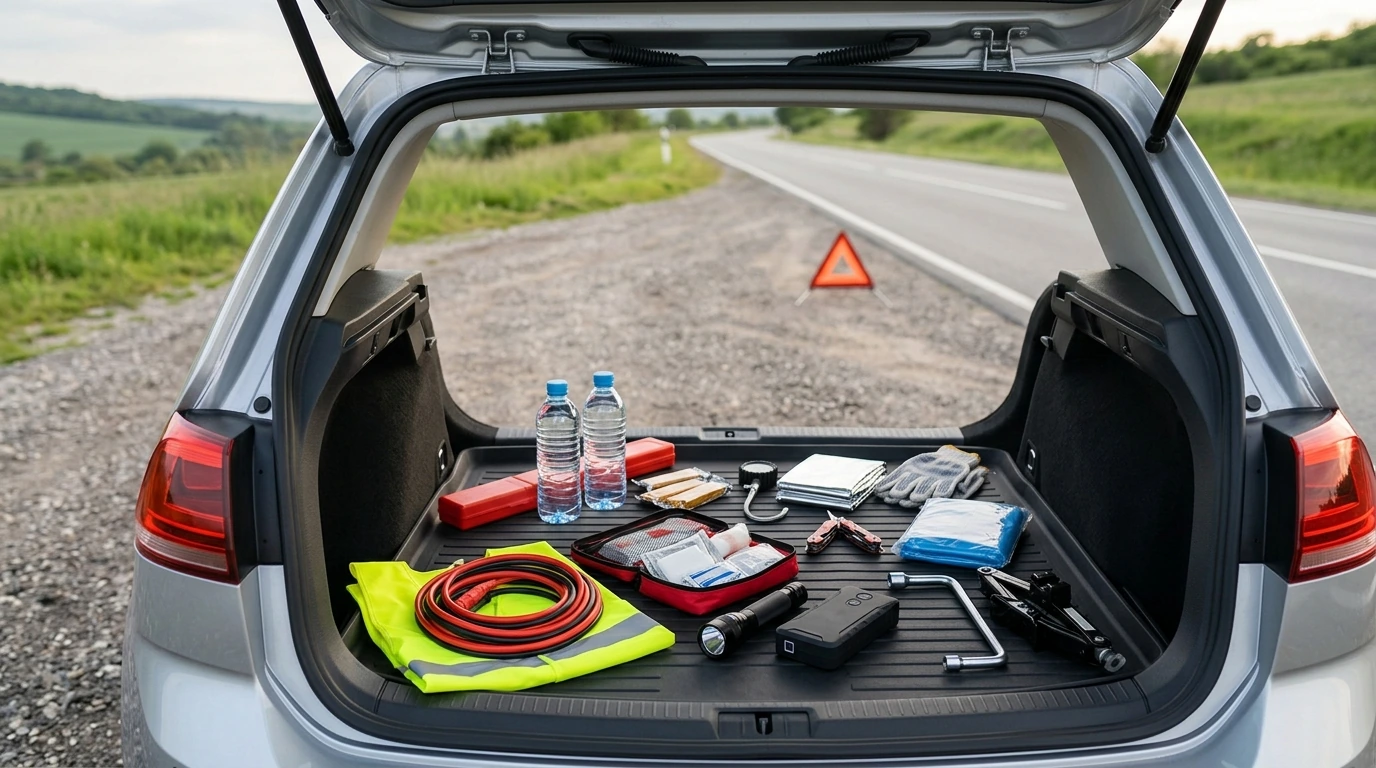
Start with visibility and signaling so other drivers can see you early. Pack reflective warning triangles, a high-visibility vest, and a flashlight or headlamp. Choose lights that store safely in a hot car, and keep fresh batteries (or a rechargeable option you can top off regularly).
Next, cover communication and power: a phone charging cable, a 12V adapter, and a power bank. If you drive long distances or in cold climates where batteries struggle, a compact jump starter rated for your engine size can be a big upgrade.
Basic first aid matters even during “minor” incidents. Include bandages, antiseptic wipes, gauze, medical tape, disposable gloves, and at least one emergency blanket. For comfort, add water (rotated seasonally), shelf-stable snacks, and electrolyte packets for long waits. Round it out with warmth and shelter: a blanket, compact poncho, and in colder regions, spare socks/gloves and hand warmers.
Vehicle basics should be simple and useful: a tire pressure gauge, a multi-tool, and (optionally) tire sealant only if it’s compatible with your tires—keeping in mind it may complicate professional repairs later.
Tire and Breakdown Tools That Make a Real Difference
A tire change only goes smoothly if the essentials are present and usable. Confirm you actually have a spare tire (or an approved repair kit), a jack that works, and a lug wrench that fits your lug nuts. If you’ve never used them, practice at home once—finding out what’s missing on the shoulder is the worst time.
Seasonal and Trip-Based Add-Ons (Customize Instead of Overpacking)
Printable Car Emergency Checklist: Pack, Store, and Maintain
For an easy, ready-to-print option, use the Printable car emergency checklist and roadside safety guide (digital download) and keep one copy at home for quick updates.
Roadside Safety Guide: Smart Habits That Prevent Emergencies
Location sharing speeds assistance. Enable emergency location features on your phone, and share live location with a trusted contact when waiting. For more guidance on planning and safety, see resources from the American Red Cross and AAA.
Digital Download Option: Keep a Copy on Your Phone and in the Car
If you like organizing important information into quick-reference lists, you may also want the Corporate Credit Card Mastery Checklist (digital download) for keeping essential account details and procedures in one place (stored securely and privately).
FAQ
How often should a car emergency kit be checked or replaced?
Check it every 3–6 months and before long trips. Replace expired first-aid items, rotate water/snacks seasonally, and test flashlights, power banks, and jump starters so they’re reliable when you need them.
What are the most important items if there’s only room for a small kit?
Prioritize visibility (triangles/vest/light), phone charging/power, basic first aid, water, and essential tire tools. Choose compact, multi-use items and store them in a small pouch you can grab quickly.
Is it safe to change a tire on the side of the road?
It can be safe only when you’re on a wide, level shoulder with good visibility and low traffic. Turn on hazards, set the parking brake, use wheel chocks if available, and if conditions feel risky, call for roadside assistance and stay protected.










Leave a comment