Swimsuit Fit Guide by Body Type: Flattering Picks
Find Your Perfect Swimsuit: A Body Type–Focused Guide to Flattering Swimwear
Swimsuit shopping gets easier when the focus shifts from changing your body to choosing design details that support it. Different proportions benefit from different necklines, leg cuts, and support features—and the right combination can help a suit feel secure, look polished, and stay comfortable from the first dip to the last towel-off. Below is a practical way to narrow options quickly and choose swimwear that fits your life, not just the dressing room mirror.
Start With Fit: The Non‑Negotiables That Make Any Suit Look Better
Before you think about “flattering,” lock in the basics that make a swimsuit feel stable and look intentional.
- Prioritize support first: A snug (not painful) band, comfortable straps, and adequate lining prevent shifting and pinching.
- Check fabric recovery: Quality stretch should bounce back and stay opaque—especially when wet.
- Use adjustability: Tie backs, sliders, removable cups, and convertible straps often matter more than the number on the tag.
- Aim for comfort in motion: Squat, raise your arms, and twist. A good suit stays put and doesn’t dig in at edges.
- Choose coverage intentionally: High necks, cheekier cuts, and fuller coverage can all work when they match your activity and comfort level.
Find Your Shape Focus: A Quick Proportions Check (No Measuring Required)
Body types aren’t boxes—they’re shortcuts for styling. Use these as a starting point, then prioritize what feels good on your body.
- Hourglass: Shoulders and hips are similar, with a more defined waist.
- Inverted triangle (athletic top): Shoulders appear broader than hips.
- Pear (bottom‑heavy): Hips appear fuller than shoulders.
- Rectangle: Shoulders and hips are similar with a less defined waist.
- Apple/round: More fullness through the midsection, often with comparatively slimmer legs and/or a fuller bust.
If body image stress shows up during shopping, it can help to remember that comfort and self-perception are part of health, too. Helpful, evidence-based resources include MedlinePlus on body image and the NHS overview of healthy weight.
Swimsuit Features That Flatter Different Body Types
Think of these as “design levers.” You can use one or two at a time—no need to chase every suggestion.
- Hourglass: Keep balance. Supportive tops, high‑waist bottoms, belted one‑pieces, and moderate leg cuts often shine.
- Pear: Pull attention upward. Statement straps, ruffles, brighter tops, and darker/sleeker bottoms; consider higher‑cut legs to elongate.
- Inverted triangle: Soften the shoulder line. Simple tops, V‑necks, wider straps for comfort, and bottoms with texture or side ties to add visual balance.
- Rectangle: Create curves. Cutouts, ruching, wrap fronts, belts, and tops with shaping; high‑cut legs can add definition.
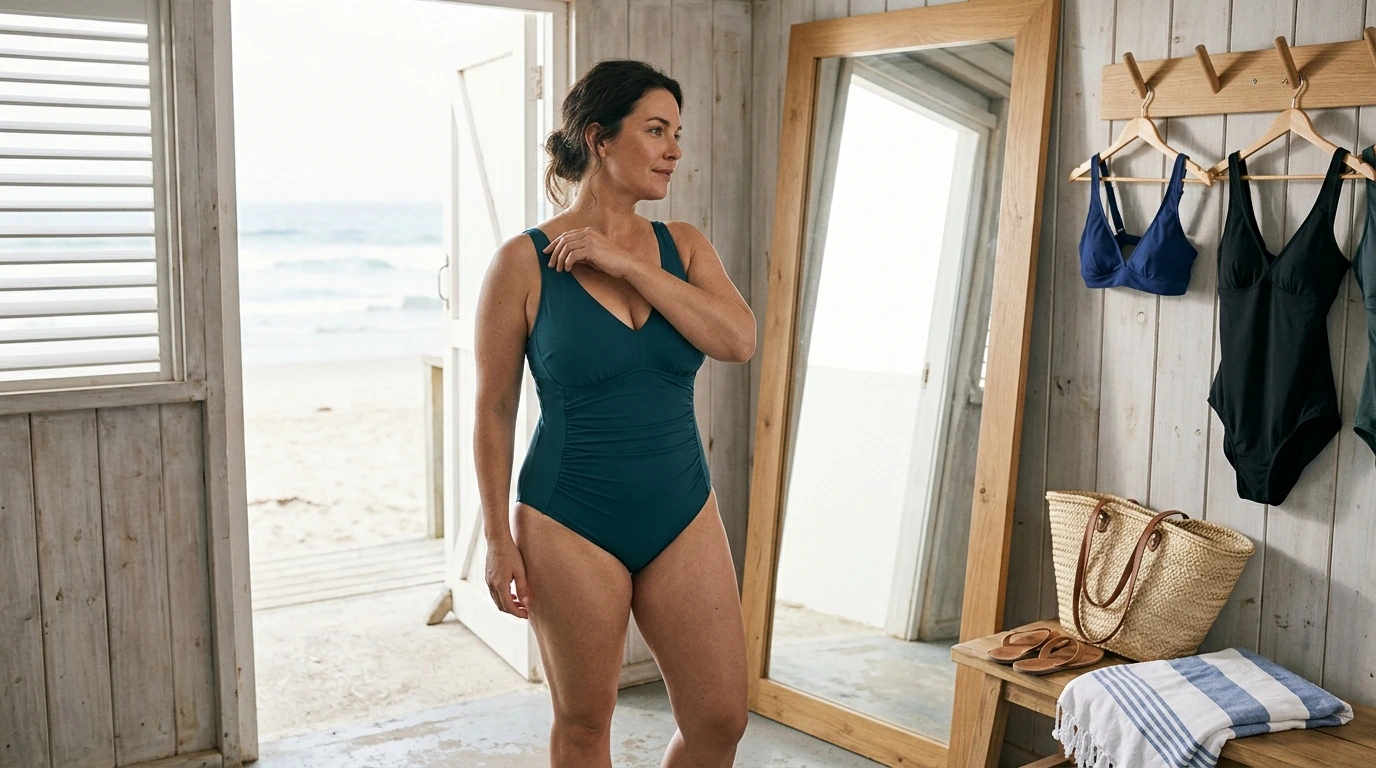
- Apple/round: Add structure and length. V‑necklines, strategic ruching, supportive underbust seams, and higher backs for security.
Body Type to Swimsuit Detail Matchups
| Body type focus | Try these silhouettes | Details that help | Details to use thoughtfully |
|---|---|---|---|
| Hourglass | Underwire bikini, wrap one‑piece, high‑waist set | Balanced coverage, defined waist, supportive band | Overly loose tops; bottoms that cut sharply at the waist |
| Pear | Halter or balconette top, high‑cut bottom, one‑shoulder top | Bold/bright top, darker bottom, adjustable straps | Very low‑rise bottoms if they reduce comfort |
| Inverted triangle | Plunge one‑piece, simple top + detailed bottom | V‑neck, minimal shoulder volume, fuller/embellished bottoms | Super-ruffled straps or high necklines if they add width |
| Rectangle | Belted one‑piece, cutout one‑piece, tie-side bikini | Ruching, wraps, texture, higher leg openings | Boxy straight-across tops without structure |
| Apple/Round | Ruched one‑piece, supportive tankini, plunge with structure | Tummy control panels, higher back, wider straps, smoothing fabric | Thin unlined suits if they feel insecure when wet |
Style Levers That Change the Whole Look (Color, Print, and Lines)
- Color-blocking can sculpt: darker panels minimize emphasis; brighter areas draw the eye.
- Vertical details elongate: seams, zippers, and piping can lengthen; horizontal bands can widen.
- Print scale matters: small prints feel subtle; bold prints spotlight the area they cover.
- Texture adds volume: ribbed fabrics and ruffles add dimension where you want it.
- Shine reflects light: glossy fabrics highlight curves; matte fabrics often feel more smoothing.
Support and Coverage Options for Real-Life Activities
- For laps or waves: higher necklines, racerbacks, secure bands, and medium-to-full bottom coverage.
- For lounging: lighter support can work, but keep adjustability for long-wear comfort.
- For larger bust support: underwire or molded cups, a snug band, and wider straps; avoid relying on neck-tie alone for hours.
- For long torso/short torso: adjustable straps and long-torso sizing reduce pulling and “wedgie” creep.
- For chafing sensitivity: smoother seams, softer linings, and mid-rise bottoms can be more comfortable.
Common Fit Problems and Quick Fixes
Recommended Digital Guides (In Stock)
- Find Your Perfect Swimsuit – A Body Type–Focused eBook Guide to Choosing Flattering Swimsuits for Your Body Type
- Corporate Credit Card Mastery Checklist (Digital Download)
A Simple Checklist Before You Buy
FAQ
What swimsuit style is most flattering for my body type?
The most flattering style is the one that balances your proportions and feels secure. Hourglass shapes often look great with defined-waist details, pears can draw attention upward with bolder tops, inverted triangles can balance with simpler tops and more detailed bottoms, rectangles can add shape with ruching or wraps, and apple/round shapes often feel best with structured support and strategic ruching.
How do I choose the right swimsuit size if I’m between sizes?
If edges dig in or feel restrictive, sizing up is usually more comfortable and can look smoother. Look for adjustable straps/backs and consider separate sizing for tops and bottoms so you can fit bust and hips independently.
Do tummy-control swimsuits actually work?
They can smooth and support through power-mesh lining, firmer fabric, and ruching that distributes tension. The effect is about comfort and gentle shaping—proper fit matters most to prevent rolling, pinching, or feeling too compressed.










Leave a comment