Discover Your Life Purpose: A 7-Step Clarity Plan
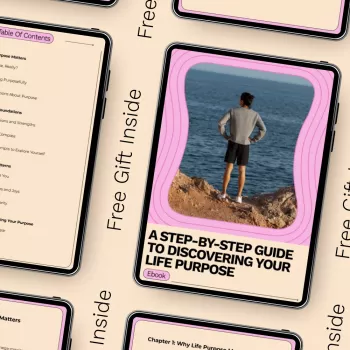
A Step-by-Step Guide to Discovering Your Life Purpose: Find Your True Calling and Live with Intention
Life purpose is less about finding a single “perfect” answer and more about building clarity through reflection, real-world experiments, and intentional choices. This guide walks through a practical process to uncover what matters most, identify patterns in strengths and motivation, test possible directions, and turn insights into a steady, meaningful life plan.
What “life purpose” really means (and what it doesn’t)
Think of purpose as a direction—recurring themes and values that shape your choices across seasons of life. It’s not a one-time revelation; it’s a guiding thread that becomes clearer as you act.
Purpose also isn’t the same as a job title. A calling can show up through different roles, projects, and communities—sometimes even outside paid work. And purpose isn’t identical to passion either; passion often follows action. Clarity tends to arrive after you try a few real things, not before.
Common signs of misalignment include chronic resentment, numbness, overcommitment, or “success” that feels strangely empty. Those signals are useful data, not character flaws.
Step 1: Create space for clarity
Clarity needs room. Start with a quick “noise audit”: reduce inputs that distort desire—endless scrolling, comparison loops, and constant busyness. Replace some of that time with two short weekly reflection blocks (30–45 minutes each) and protect them like appointments.
Capture thoughts in one place (a notes app or a journal) so patterns can emerge over time. If you need one simple starting question, use: “When do I feel most like myself?” Write a few lines each session. Don’t aim for poetry—aim for honest data.
Step 2: Identify core values that guide decisions
Values turn vague longing into practical direction. List 10 values, then narrow to 5 non-negotiables—the ones that, when violated, produce lasting regret (not just temporary discomfort).
Define each value in plain language by describing what it looks like in behavior. For example, “freedom” might mean “I control my schedule 3 days a week” or “I can say no without retaliation.” Also watch for “borrowed values”: ideas that sound impressive socially but don’t actually motivate your actions.
Finally, turn values into decision rules. Example: “If it harms my integrity, it’s a no—even if it pays more.” Rules reduce overthinking in high-pressure moments.
Step 3: Map strengths, skills, and energizers
Separate skills (learned abilities) from strengths (what improves with use and tends to energize you). You can be skilled at something that drains you—and strong at something you’ve never formally studied.
Use three evidence sources: past results, feedback from others, and moments when “time flew by.” Then track energizers and drainers for a week. Note what happens after meetings, creative work, teaching, organizing, problem-solving, or caretaking—do you feel more alive or depleted?
Look for repeatable strengths such as explaining complex ideas, building simple systems, calming conflict, designing experiences, or making people feel seen.
Step 4: Find your meaning patterns in the past
Purpose often leaves clues in your story. Write three short stories: (1) a proud moment, (2) a hard season you overcame, and (3) a time you helped someone. Keep each to a few paragraphs.
Step 5: Turn pain, curiosity, and service into a calling statement
Step 6: Test your purpose with small experiments (not big leaps)
| Experiment | Timebox | Success signals | What to track | Next step |
|---|---|---|---|---|
| One-hour volunteer shift in a cause area | 7 days | Felt meaningful; clear contribution | Energy 1–10; what tasks felt natural | Repeat weekly or try a different role |
| Create a simple resource for others (checklist, mini-lesson) | 14 days | People used it; questions came in | Engagement; ease of creating | Expand into a small series or workshop |
| Informational interview with someone in a related path | 7 days | More clarity than before; new options | What resonated; what repelled | Shadow or take a beginner project |
Step 7: Choose a direction using an intention-based decision filter
Putting it all together: a guided path to stay consistent
Keep a “meaning log” of small moments of contribution and alignment. Over time, this becomes evidence that builds confidence and reduces second-guessing. For a structured workbook-style process that keeps everything organized, consider A Step-by-Step Guide to Discovering Your Life Purpose – Find Your True Calling and Live with Intention.
If you also want practical support for the “sustainability” side of purpose—habits and money decisions that reduce stress—Gen Z Smart Money Habits Bundle | The New Money Mindset + Smart Money Moves for generation z banking habits can help you build stability while you test new directions.
For more on how meaning and strengths relate to well-being, explore the American Psychological Association’s overview on meaning in life, the VIA Institute on Character strengths, and research-backed resources from the Greater Good Science Center at UC Berkeley.
FAQ
How long does it take to discover a life purpose?
Many people get initial clarity in 2–4 weeks of reflection, then feel much more confident after 1–3 months of small experiments. Purpose also evolves with seasons, so it’s normal to refine it as your life changes.
What if multiple callings feel equally meaningful?
Choose the next best direction for a 90-day window and test it with simple experiments rather than trying to decide forever. Purpose can be expressed through more than one role, and you can rotate focus across seasons while keeping your values steady.
What if nothing feels meaningful right now?
Burnout, grief, and depression can flatten motivation and make everything feel gray, so start with basics like rest and support (including professional help if needed). Then run tiny curiosity or service experiments and track energy afterward instead of waiting for inspiration to appear first.











Leave a comment