Cozy Dinner Planning Made Easy: A Simple Weekly System
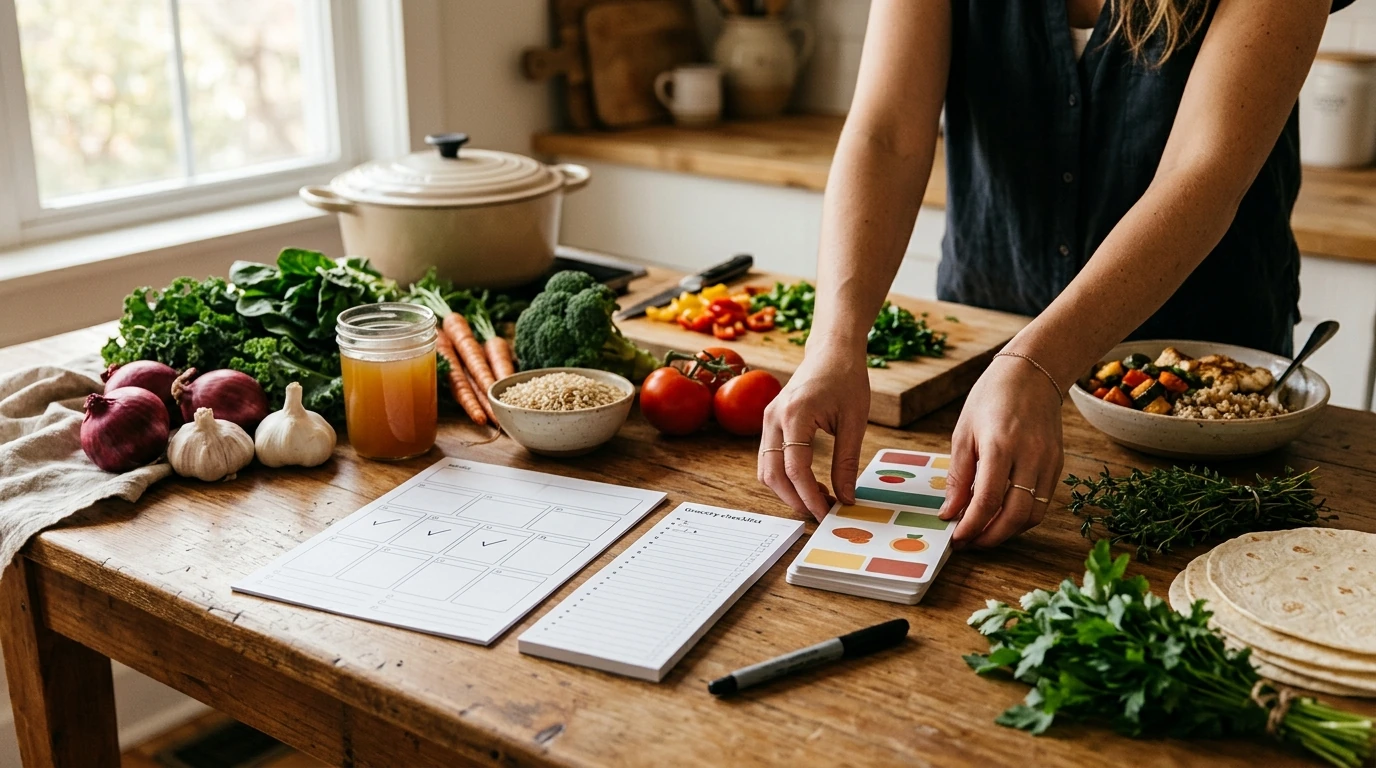
Your Simple System for Cozy Dinners (Without the Nightly Guesswork)
Cozy dinners feel easy when the decisions are already made: what to cook, what to buy, and how to fit it into a busy week. A simple 3-in-1 planning bundle turns dinner into a repeatable routine—so weeknights run smoother, groceries are less wasteful, and the table still feels warm and comforting.
If dinner has been turning into a daily debate, a last-minute grocery run, or an expensive takeout habit, the fix usually isn’t “more willpower.” It’s a lighter system: fewer choices, clearer timing, and ingredients that actually work together across multiple meals.
What the 3-in-1 bundle helps solve
- Decision fatigue between 4–6 p.m., when energy is low and hunger is high
- Last-minute takeout driven by unclear plans or missing ingredients
- Overbuying groceries that don’t combine into complete meals
- Repeating the same few meals because planning feels like a big project
- Messy weeks where cooking, leftovers, and schedules don’t align
The goal isn’t perfection—it’s making “What’s for dinner?” a smaller question with fewer moving parts.
How the system works in real life
- Start with a short weekly reset: pick dinners for a set number of nights (often 3–5), leaving room for leftovers and one flexible night.
- Build a grocery list around those dinners: prioritize overlapping ingredients (like onions, greens, broth, rice, tortillas) to reduce waste and cost.
- Use a simple prep rhythm: one quick batch task—chop vegetables, wash greens, cook a grain, or pre-season a protein—so weeknights move faster.
- Rotate cozy staples: keep a small lineup of comfort meals that don’t feel repetitive because the sides, sauces, and add-ins change.
- Keep a “backup plan” meal: pantry/freezer friendly for nights when plans shift.
When the plan is light and repeatable, it’s easier to stick with—even during a hectic week.
What “cozy dinners” look like with a repeatable plan
- Warm, familiar flavors with simple steps and predictable timing
- Flexible recipes that scale up for leftovers or scale down for smaller households
- Mix-and-match components (base + protein + veg + sauce) so one shopping list creates variety
- Comfort foods balanced with lighter sides so meals feel satisfying, not heavy
- Low-stress cleanup strategies like sheet-pan meals, one-pot options, or intentional leftover planning
For an easy “balance check,” Harvard’s Healthy Eating Plate offers a practical visual for building meals with veggies, protein, and whole grains in a realistic way: https://www.hsph.harvard.edu/nutritionsource/healthy-eating-plate/.
A simple weekly flow to follow
- Pick the days: identify the busiest nights first, then plan the easiest meals for those nights.
- Choose dinner types: include at least one fast meal, one leftover-friendly meal, and one comfort classic.
- Map leftovers intentionally: plan one dinner that becomes lunch or a “remix” later (tacos into taco salads; roasted chicken into soup).
- Shop once with a focused list: prioritize ingredients that cover multiple meals.
- Prep one small thing: even 10–20 minutes can remove the friction that triggers takeout.
Weekly dinner rhythm (example you can adapt)
| Step | When | Time needed | Outcome |
|---|---|---|---|
| Choose dinners (3–5) | Weekend or early week | 10–15 min | Clear plan for the week |
| Write grocery list | Right after choosing dinners | 10 min | Fewer impulse buys |
| Shop | Once weekly | 30–60 min | Everything on hand |
| Mini prep | Same day as shopping or next day | 10–25 min | Faster cooking later |
| Cook + plan leftovers | Weeknights | 20–45 min | Dinner served with less stress |
Effortless meal planning habits that keep it going
If affordability is a priority, MyPlate’s budget tips are a solid guide for keeping meals realistic without relying on specialty ingredients: https://www.myplate.gov/eat-healthy/budget.
Featured bundles to make cozy dinner planning easier
- Your Simple System for Cozy Dinners: 3-in-1 Bundle for Effortless Meal Planning ($249.99) — a ready-to-use structure for planning, shopping, and keeping weeknights calm.
- Corporate Credit Card Mastery Checklist ($3.99) — helpful if you want a cleaner system for tracking household or team spending categories (including groceries) and cutting surprise costs.
- Gen Z Smart Money Habits Bundle ($259.99) — useful for building practical budgeting routines that pair well with meal planning when you’re trying to reduce takeout and impulse shopping.
Who this bundle is best for
Getting started quickly
For leftover safety and storage basics (especially when you’re planning “cook once, eat twice”), the USDA’s guidance is a reliable reference: https://www.fsis.usda.gov/food-safety/safe-food-handling-and-preparation/food-safety-basics/leftovers-and-food-safety.
FAQ
How many nights per week should be planned for dinner?
Planning 3–5 dinners is a sweet spot for most households because it leaves room for leftovers, social plans, and one flexible night. Consistency matters more than planning every single day.
What if schedules change and the planned meal doesn’t happen?
Swap the cooking night, lean on a pantry/freezer backup, and prioritize meals that can shift 1–2 days without ingredients going to waste. Store leftovers promptly and follow safe cooling and reheating practices.
How can grocery shopping stay affordable with cozy dinner planning?
Keep costs down by choosing meals with overlapping ingredients, buying seasonal produce, and planning at least one low-cost staple dinner each week. The biggest savings often come from skipping specialty one-off items that don’t get used again.











Leave a comment