Stretch Smart Daily Routine: Mobility & Flexibility for Beginners
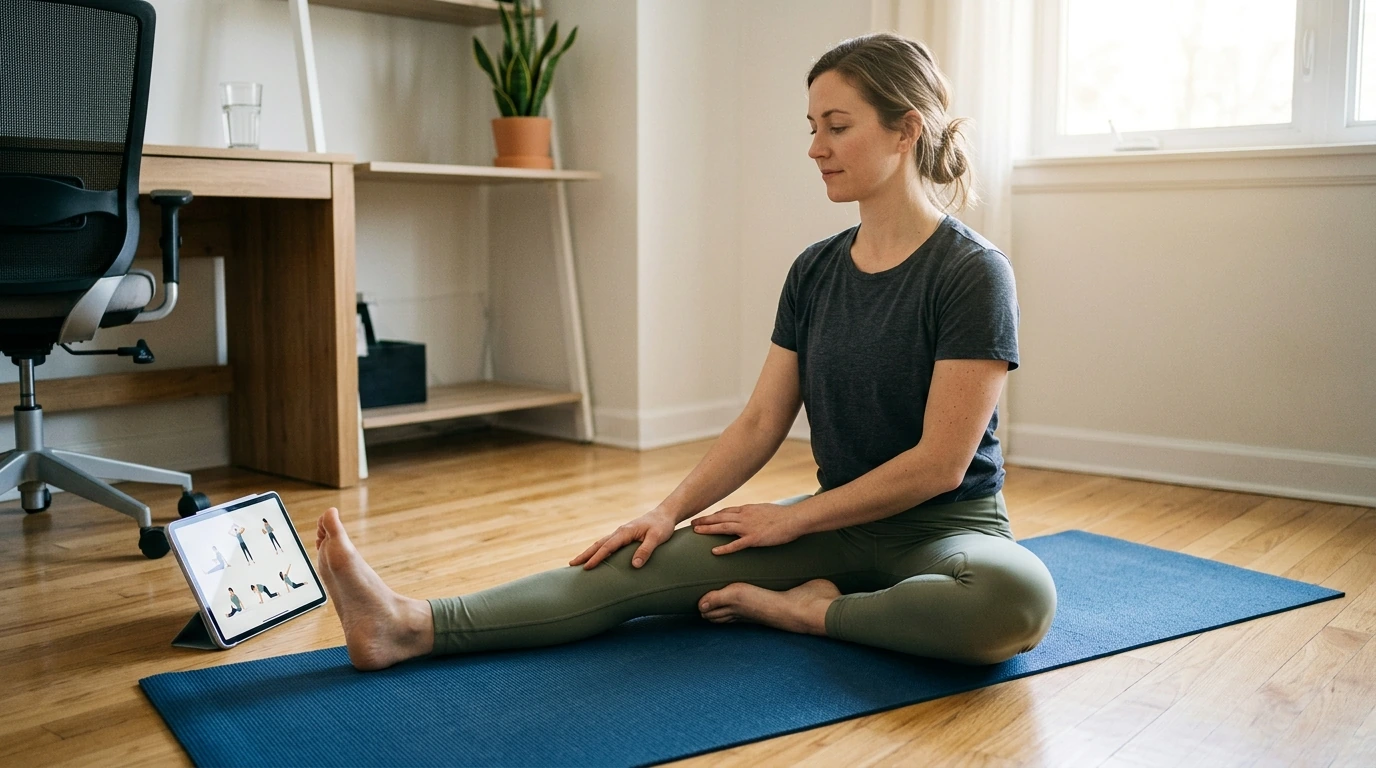
Stretch Smart: Bend Better, Move Freer — A Beginner-Friendly Daily Stretching Routine
A simple, repeatable stretching habit can improve how the body feels and moves day to day—especially for beginners who need clear steps, safe cues, and a plan that fits real life. A “stretch smart” routine isn’t about forcing bigger splits or pushing through discomfort. It’s about building comfortable range of motion you can actually use, so daily activities (sitting, walking, lifting, reaching) feel smoother and less stiff.
Below is a beginner-friendly approach you can repeat daily, plus a 7-day starter plan to remove guesswork and help you stay consistent.
What “stretch smart” means for beginners
- Consistency beats intensity: 8–15 minutes most days is more effective than one long, occasional session.
- Flexibility + mobility: flexibility is muscle length; mobility is control through that length. You want both.
- Gentle tension, calm breathing: avoid sharp pain, numbness, tingling, or joint pinching.
- Warm tissue responds better: do 2–3 minutes of easy movement first (marching in place, arm circles, easy squats).
- Progress with control: improve positioning and steadiness before chasing deeper ranges.
For general flexibility guidelines, the Mayo Clinic’s stretching overview aligns with this approach: move gently, avoid bouncing, and prioritize good form.
Who this routine fits best
- Beginners who feel stiff after sitting, commuting, or desk work.
- People returning to movement after a break who want a low-friction starting point.
- Anyone who wants a daily reset for hips, hamstrings, calves, chest, and upper back.
- Those aiming to support strength training, walking, yoga, or recreational sports with better range of motion.
- People who prefer a clear plan with realistic time expectations and simple cues.
A beginner-friendly daily sequence (warm-up → mobility → stretches)
Use this order to help your body “open up” without feeling yanked into positions it can’t yet control.
1) Warm-up (2–3 minutes)
Keep it light: marching in place, arm circles, gentle bodyweight squats, or an easy walk around the room. The goal is warmth and reduced stiffness—not fatigue.
2) Mobility (3–5 minutes)
Mobility work uses controlled reps (not long holds) to teach the body to own the range. Think: smooth circles, slow hinges, rotations, and bridges.
3) Stretching (5–10 minutes)
Use longer holds with slow breathing. A good target is 3–5/10 intensity: noticeable tension where you feel the stretch, while still able to breathe calmly and relax your face and shoulders.
If you want a reference point for frequency and general recommendations, the American College of Sports Medicine (ACSM) shares flexibility training guidance that supports regular, well-paced practice.
7-Day Starter Plan (10–15 minutes per day)
| Day | Focus | Mobility (controlled reps) | Stretches (holds) | Notes |
|---|---|---|---|---|
| Day 1 | Hips + Hamstrings | Hip circles, glute bridge | Kneeling hip flexor, hamstring stretch | Keep ribs down; avoid lower-back arching |
| Day 2 | Upper Back + Chest | Thoracic rotations, scapular wall slides | Doorway chest stretch, child’s pose | Breathe into upper ribs; shoulders relaxed |
| Day 3 | Ankles + Calves | Ankle rocks, heel-toe raises | Calf stretch (straight & bent knee) | Move slowly; heel stays heavy |
| Day 4 | Full-Body Reset | Cat-cow, deep squat prying (gentle) | Figure-4/glute, lat stretch | Use support as needed; stay comfortable |
| Day 5 | Hips (rotation) | 90/90 switches (easy range) | Piriformis/glute stretch, adductor stretch | No forcing knees; focus on smooth control |
| Day 6 | Hamstrings + Backline | Good-morning hinge (bodyweight) | Seated or supine hamstring, calf stretch | Hinge at hips; keep spine long |
| Day 7 | Recovery + Breath | Light flow (choose 2 moves) | Gentle full-body holds | Keep it easy; aim to feel refreshed, not drained |
Technique cues that make stretching feel better (and work better)
- Breathe to downshift: use nasal breathing when possible; make the exhale slightly longer to reduce bracing and “guarding.”
- Lengthen, don’t crank: create space through the spine and joints first, then gradually deepen.
- Stabilize first: light trunk tension (ribs down, pelvis steady) helps the stretch land in the intended area.
- Micro-bend joints: a soft knee or elbow can reduce joint strain and make the stretch more targeted.
- Hold times: 20–60 seconds per stretch; repeat 1–3 rounds based on time and how you feel.
Common beginner mistakes and quick fixes
How to progress without overdoing it
Safety notes and when to get guidance
What’s inside the Stretch Smart eBook
If you prefer a structured plan you can pull up anytime, Stretch Smart: Bend Better, Move Freer – Beginner-Friendly Stretching eBook | Daily Stretching Routine for Beginners | Flexibility & Mobility Guide is designed around daily practice—warm-up, mobility, and stretching—so you’re not guessing what to do next.
For shoppers who also like organizing other parts of life with digital tools, Corporate Credit Card Mastery Checklist | How to Manage Corporate Credit Cards for Small Business, Finance Teams & Entrepreneurs | Digital Download is another in-stock download.
Making the habit stick (so results show up)
FAQ
How long should a beginner hold a stretch each day?
Most beginners do well with 20–60 second holds, repeated 1–3 rounds. Stay at mild tension and prioritize steady breathing over forcing deeper range.
Is stretching every day okay for beginners?
Gentle daily stretching is typically fine, especially when you keep intensity moderate and rotate emphasis (hips one day, upper body the next, ankles another day). If soreness accumulates, reduce hold time or take a lighter recovery day.
What’s the difference between mobility and flexibility?
Flexibility is how far a muscle can lengthen, often passively; mobility is your ability to control movement through that range. Combining both helps beginners move better because you’re not just getting looser—you’re getting steadier and more capable in the new range.











Leave a comment