AI Walking Tours: Personalized Routes for Better City Days
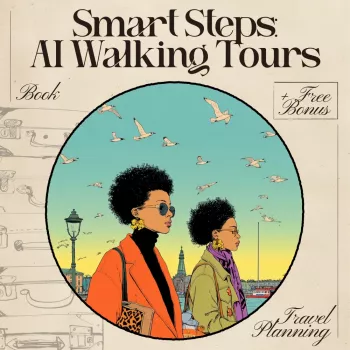
Smart Steps: AI Walking Tours for Personalized Routes and Smarter City Days
Walking is one of the fastest ways to “get” a city—its rhythm, its neighborhoods, its small surprises—provided the route actually fits your day. A list of attractions isn’t a plan. A good walking day needs the right start and finish, a realistic pace, and a sequence that respects real constraints like opening hours, steep streets, and when crowds hit.
Smart Steps: AI Walking Tours – Ultimate Travel eBook for ai for free walking tour recommendations, Personalized Routes, and Smart Itinerary Planning is designed for travelers who want the flexibility of free recommendations, plus the clarity of a route that’s actually walkable. It focuses on turning AI-generated ideas into a clean itinerary—one that still leaves breathing room for detours, cafés, and the best kind of unplanned discovery.
What makes an AI-built walking tour feel “personal”
A route feels personal when it reflects how you like to move through a place—not just what a city is “supposed” to include. The difference comes down to inputs and tradeoffs.
Interests first, not landmarks first
Personal routes start with what you care about: architecture details, street art corridors, food markets, parks and riverside paths, used bookshops, kid-friendly stops, or viewpoints that are worth the climb.
Constraints that actually matter
Start/end points, total distance, mobility needs, stroller access, steep streets, and weather exposure (sun, wind, rain) shape how enjoyable the walk will be. When those guardrails are set early, the route stops fighting you halfway through the day.
Time logic that respects reality
Opening hours, reservation windows, and pacing between stops are where many “perfect” routes break. A great route puts timed attractions where they belong, then uses flexible stops (plazas, parks, scenic streets) to absorb delays.
Local texture in the gaps
Memorable days mix headline sights with small, high-signal detours: a quiet courtyard, a mural alley, a bakery that’s busy for a reason, or a short riverside segment that resets your energy.
Decision clarity
Instead of ten “maybe” options, a personal route gives you one confident sequence with a few optional add-ons—so you spend less time debating and more time walking.
How Smart Steps helps turn free recommendations into a route that works
Free walking tour lists and self-guided highlights are everywhere. The hard part is converting those ideas into a route that fits your day’s limits and your travel style.
Walking is also a practical way to add movement to a travel day; for general health context, authoritative guidance on physical activity benefits is available from the CDC and the World Health Organization.
A simple workflow for smart itinerary planning on foot
Step 1: Define the walk’s purpose
Step 2: Set guardrails
Step 3: Generate two route options
Step 4: Add time buffers
Step 5: Create backups
Step 6: Save for offline access
Keep route details in a notes app and download maps in advance. For platform instructions, see Google Maps Help: Download areas and navigate offline.
Quick route-planning checklist for a walkable day
| Plan item | Decide this | Why it helps |
|---|---|---|
| Start/end points | Hotel/transport hub + a clear finish near transit | Prevents long returns when energy is low |
| Time window | Total hours + a hard stop time | Keeps stops realistic and avoids rushed final legs |
| Pace | Slow / normal / fast + break frequency | Aligns the route with comfort and enjoyment |
| Distance & terrain | Max miles/km + hills/steps tolerance | Avoids fatigue surprises mid-route |
| Priorities | Top 2 must-sees + 3 nice-to-haves | Protects the best moments if plans change |
| Backup options | Rain stop + shortcut + early finish | Reduces stress when conditions shift |
Route styles to build with AI (and when to use each)
Common problems (and how to fix them before the walk starts)
Who Smart Steps is for (and how to get the most value from it)
Get the eBook: Smart Steps: AI Walking Tours
If your saved pins always look better than your real-world pacing, this is the reset: Smart Steps: AI Walking Tours – Ultimate Travel eBook for ai for free walking tour recommendations, Personalized Routes, and Smart Itinerary Planning helps generate free walking tour recommendations and turn them into personalized routes that respect time, terrain, and opening hours.
For travelers mixing work and quick city exploration, pairing a solid walking plan with a simple spending workflow can also help keep trips friction-free: Corporate Credit Card Mastery Checklist | How to Manage Corporate Credit Cards for Small Business, Finance Teams & Entrepreneurs | Digital Download.
FAQ
Can AI really recommend free walking tours and self-guided routes that feel local?
Yes—AI can synthesize public information with your preferences into a coherent route, especially when you specify interests, time available, pace, and start/end points. Results improve further with a quick sanity check for opening hours and realistic distances between stops.
How do personalized routes handle weather, crowds, and last-minute changes?
The most reliable approach is building a primary route plus a rain alternative, adding buffer time, and including a shortcut or early-finish endpoint near transit. Re-ordering stops by time-of-day also helps you hit popular areas before peak crowds or heat.
What should be provided to get a realistic itinerary for a walking day?
Provide the city or neighborhood, date/day of week, available hours, must-sees, max distance, mobility constraints, preferred meal timing, and whether you want a scenic or efficient vibe. With those basics, the route can be paced accurately and stay flexible.










Leave a comment