Creative Open Mic Night Ideas for Hosts and Performers
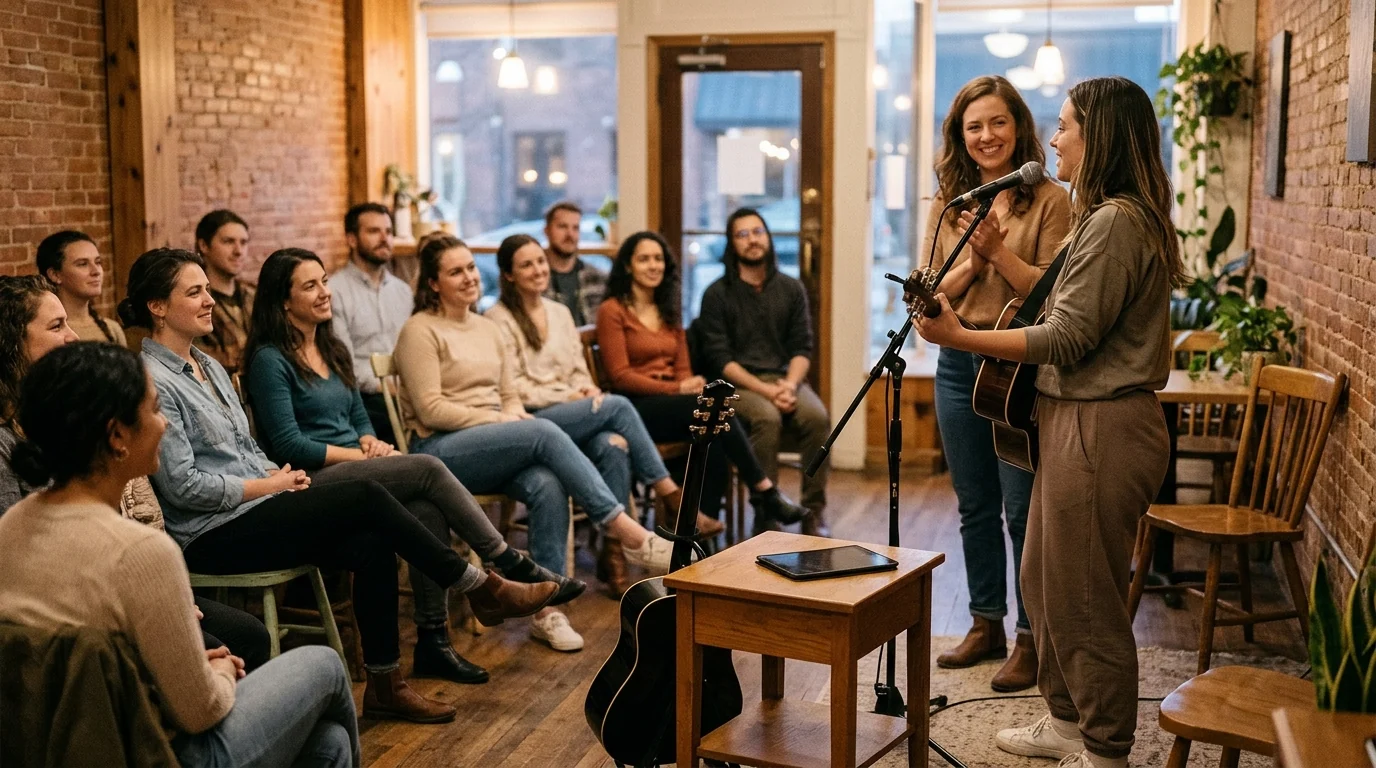
An open mic night can be more than a sign-up sheet and a microphone. A little structure can help you welcome new performers, give regulars a reason to return, and leave enough room for the unexpected moments that make a live event memorable. Whether you’re hosting at a café, library, community space, or small venue, start with a plan that fits the people and the room. When you want a fresh starting point for future gatherings, our Creative Open Mic Night Ideas Ebook is an idea resource for hosts, performers, and event creators.
Start with the kind of night you want to host
Choose one primary goal before you choose a format. Do you want first-timers to feel comfortable taking the stage? Are you bringing neighbors together, or giving familiar performers a new challenge? That decision makes it easier to judge whether an idea belongs in this particular event.
Next, work backward from your space and schedule. A quiet room with 20 seats may suit longer sets and conversation between acts. A busy venue with a large sign-up list may need shorter sets and a firm finish time. Account for the welcome, introductions, changeovers, and a break before you decide how many slots to offer. If the event runs for two hours, don’t fill every minute with scheduled performances; a small buffer keeps one late start from squeezing the final act.
Match a format to your crowd
A format gives your night a recognizable shape without telling performers exactly what to do. These are adaptable ideas to try, not a list of contents promised by the ebook.
| Format | How it works | Good fit for |
|---|---|---|
| First-timer spotlight | Reserve a few early slots for newcomers and offer a warm, brief introduction. | Welcoming new performers |
| Theme night | Invite acts to interpret a broad theme in their own style. | Giving regulars a fresh prompt |
| Short-set sampler | Use shorter sets so more people can take the stage. | Large sign-up lists |
| Collaboration round | Offer an optional slot for performers who want to create something together. | Building community |
Pick one format for the night rather than piling on several activities. A theme, a timed challenge, and a collaboration round might each be fun on their own, but together they can consume the time people came to spend performing. If you choose a theme, make it broad enough for a song, poem, comedy set, or story—and let performers opt out.
Make it easy to step up to the mic
Share the essentials before people arrive: when sign-ups open, how long each set lasts, what equipment is available, and any content expectations for the venue. Say whether performers should bring an instrument, a device connection, or their own accompaniment. Clear details reduce last-minute questions and help someone decide whether this is the right night for their act.
At the start, give a brief welcome that explains the running order and asks the audience to listen supportively. Tell first-timers whom to approach if they have a question before their slot. You don’t need to single anyone out to be encouraging; a calm introduction and a clear cue to begin can do a lot.
Make event information accessible, too. Share practical details about the space and provide a clear way to request accommodations ahead of time. The U.S. Department of Justice’s introduction to the Americans with Disabilities Act is a useful starting point for understanding accessibility responsibilities. For your event, focus on giving people information early enough to ask about what they need.
Keep the energy moving without rushing performers
A simple rhythm is often enough: welcome everyone, introduce the opening acts, take a short break, bring up the remaining acts, and close with a thank-you. Let performers know roughly when their turn is coming so they can get ready without hovering beside the stage all night.
Keep introductions concise and build in time for microphones, instruments, or other equipment to change hands. Decide in advance what you’ll do if a performer doesn’t appear when called or if extra people ask to sign up. You might move to the next name and offer the missed performer a later opening if time allows; you might keep a short waitlist for cancellations. Either way, a consistent approach is easier to communicate than an improvised exception.
Transitions don’t need to become performances of their own. Thank the previous act, briefly restate the theme, or let the audience know a changeover will take a moment. These low-pressure bridges keep the room engaged without forcing audience participation or making the next performer feel rushed.
Keep a fresh idea ready for the next event
If planning also involves tracking venue or team expenses, our Corporate Credit Card Mastery Checklist is a separate resource for small businesses and finance teams managing corporate cards. For the creative side, explore our Creative Open Mic Night Ideas Ebook when you’re ready to plan another gathering. Choose an idea that suits your space and community, then give performers the time and welcome to make it their own.
FAQ
What is a good theme for an open mic night?
Choose a broad theme such as new beginnings or hometown stories so music, poetry, comedy, and other acts can interpret it in their own ways. Make the theme optional.
How can a host make an open mic welcoming to beginners?
Publish clear sign-up details, explain the format at the start, and keep introductions supportive. You can also reserve a few early slots for first-timers.












Leave a comment