AI Plant Care Routine: Photos, Logs, Fewer Mistakes
Using AI to Keep Your Plants Thriving: The Ultimate Guide for Smart Gardeners
Plant care gets easier when it stops being guesswork. AI can help turn scattered observations into a repeatable routine by combining photos, local weather, indoor climate readings, and simple care logs. The goal isn’t to “automate” your plants—it’s to spot patterns faster, prevent common mistakes (especially overwatering), and make small, confident adjustments whether you grow pothos on a shelf or tomatoes on a patio.
If you want a ready-to-use framework you can follow week after week, Using AI to Keep Your Plants Thriving: The Ultimate Guide for Smart Gardeners is a simple, practical companion for building a consistent routine without overcomplicating your setup.
What AI Can (and Can’t) Do for Plant Care
AI is best at noticing trends—especially the slow changes that are easy to miss when you see your plants every day. With consistent inputs, it can help you catch issues earlier and choose more targeted fixes.
- Detect early stress signals: Repeated photos can reveal subtle drooping patterns, leaf discoloration, stalled growth, and uneven new leaves before the plant “crashes.”
- Improve watering decisions: Instead of a fixed schedule, AI can weigh soil moisture, temperature, humidity, pot size, and recent watering history to recommend timing adjustments.
- Support smarter placement: With light estimates and photo comparisons, AI can suggest rotations, window changes, or supplemental lighting to reduce legginess.
- Know its limits: AI can’t replace plant identification, the right potting mix, drainage, or realistic expectations for your climate and season.
- Decision-support, not autopilot: The final call still depends on the species and what’s happening at the roots, not just the leaves.
A Simple AI-Assisted Workflow for Any Gardener
A reliable system beats a complicated one. The best results usually come from consistency, not expensive gear.
- Step 1: Confirm the plant and baseline needs. Note light category (low/medium/bright), general watering rhythm, temperature range, and toxicity if pets or kids are around.
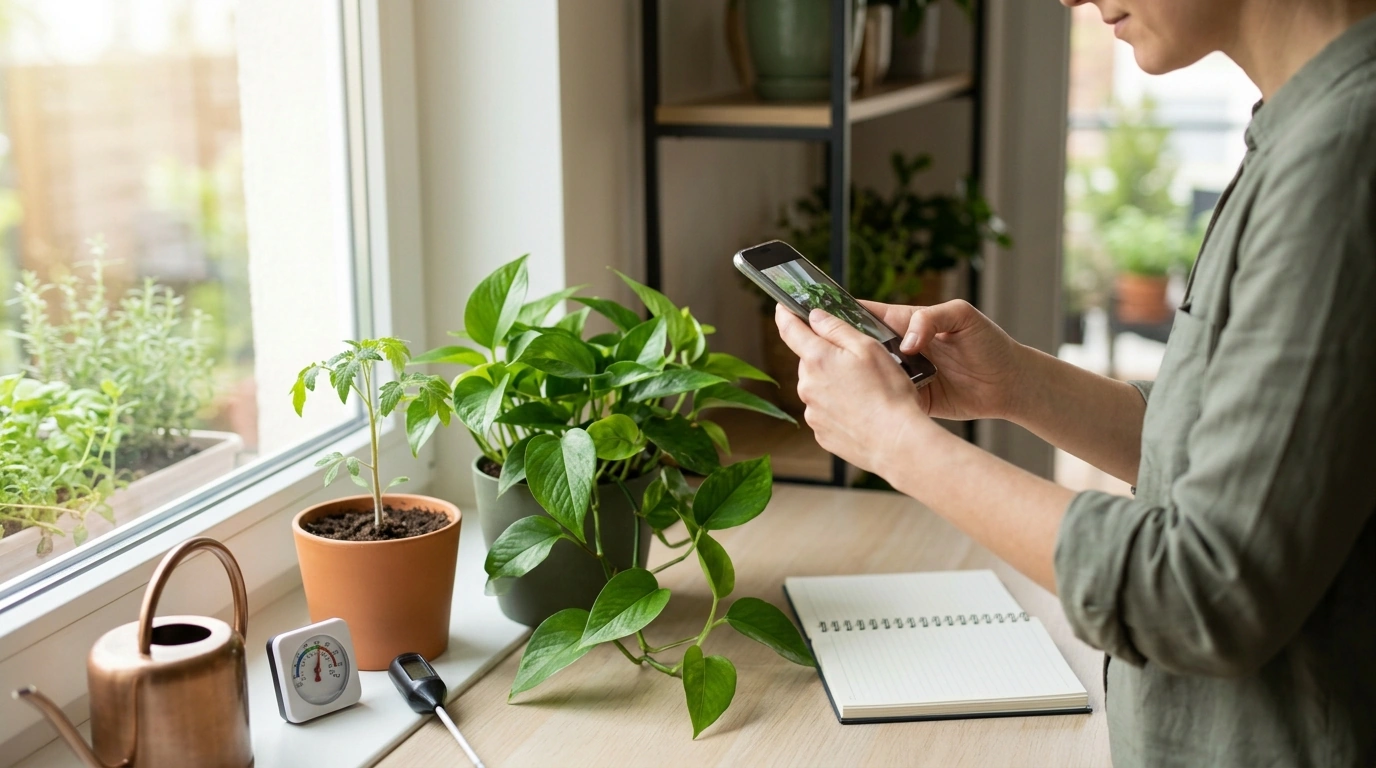
- Step 2: Take consistent photos weekly. Same angle, similar time of day, similar distance. AI becomes more useful when it can compare “like with like.”
- Step 3: Track inputs and outcomes. Water amount, fertilizer dates, repotting, pruning, pest treatments, and any placement changes.
- Step 4: Add one data upgrade (optional). A soil moisture sensor or a basic temp/humidity meter often provides the biggest “aha” moments.
- Step 5: Review weekly and change one variable at a time. Adjust light first, then watering, then nutrients—observe 7–14 days before stacking changes.
Choosing the Right Data to Feed Your Plant Assistant
AI outputs are only as steady as the data going in. You don’t need perfect measurements—just repeatable ones.
For outdoor gardens, use your local hardiness zone to set expectations for what can thrive long-term. The USDA Plant Hardiness Zone Map is a dependable reference for climate baselines.
Tools That Pair Well with AI (From No-Cost to Sensor-Assisted)
AI-Friendly Plant Care Tools at a Glance
| Tool type | Best for | Data you track | Common mistake to avoid |
|---|---|---|---|
| Photo-based plant ID & tracking apps | Beginners and mixed collections | Images, reminders, notes | Treating AI diagnosis as definitive without checking care basics |
| Soil moisture sensors | Overwaterers, larger pots, thirsty plants | Moisture trends over days | Watering the moment the topsoil looks dry without confirming root-zone moisture |
| Indoor climate meter (temp/humidity) | Tropical houseplants, winter heating seasons | Humidity and temperature swings | Ignoring drafts and heater vents that cause stress |
| Smart irrigation timer | Outdoor beds and containers | Schedule + weather conditions | Keeping summer settings during cooler weeks and causing soggy soil |
| Grow light + timer | Low-light homes, seedlings, overwintering | Photoperiod consistency | Placing lights too far away, leading to weak growth |
When you want a lightweight “system” that’s easy to maintain, pairing a weekly photo habit with a structured guide can keep your routine from drifting. Using AI to Keep Your Plants Thriving: The Ultimate Guide for Smart Gardeners is designed for exactly that: consistent steps, clear logs, and small adjustments that compound over time.
Common Plant Problems AI Can Help Solve Faster
For reliable, research-based care fundamentals you can use to sanity-check AI suggestions, the University of Minnesota Extension houseplant resources are a strong reference.
Safe Fertilizing and Watering with AI Recommendations
Privacy, Reliability, and Practical Guardrails
Recommended Downloads for Organized Gardeners
- Using AI to Keep Your Plants Thriving: The Ultimate Guide for Smart Gardeners ($17.99) — a practical, repeatable system for photos, logs, and weekly adjustments.
- Corporate Credit Card Mastery Checklist ($3.99) — helpful if your “garden hobby” has turned into a small plant side business and you want cleaner purchasing and expense tracking.
FAQ
Can AI accurately diagnose what’s wrong with my plant from a photo?
Photo-based suggestions are useful for narrowing possibilities (light stress, watering issues, visible pests), but they’re not definitive. Confirm with context like soil moisture, recent watering, and where the symptoms appear (older leaves vs. new growth), especially before treating for pests or disease.
What’s the easiest way to start using AI for plant care without buying sensors?
Take one set of photos each week and keep a simple log of watering amount, the plant’s location/light, and any changes you make. With consistent inputs, AI can summarize trends and help you set reminders without adding extra devices.
Will AI help prevent overwatering?
Yes—especially when you pair AI recommendations with a root-zone reality check like a moisture sensor or pot-weight habit. It can also help you slow watering frequency during low-growth periods (often winter) when plants use less water.












Leave a comment