How Sleep Loss Affects Your Skin: Circles and Breakouts
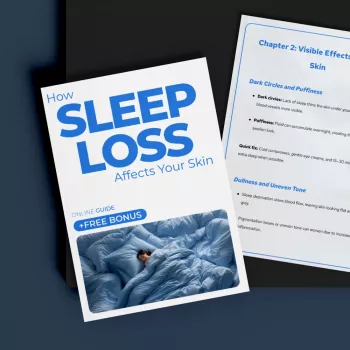
A short night can leave your skin looking tired, but one morning rarely tells the whole story. Under-eye shadows, puffiness, and breakouts have many possible contributors. We find it more useful to notice what changes over several weeks than to assign a cause to every new spot or tired-looking morning. If you want to keep sleep and skin observations together, our digital skincare guide offers a focused place to start.
What a Short Night Can Change
Sleep gives your body time to carry out normal repair and recovery processes, including those that support your skin. Repeated sleep restriction may affect skin barrier function and make signs of fatigue more noticeable. That does not mean a late night will produce a predictable skin reaction, or that sleeping longer will clear a particular concern.
Start by distinguishing an occasional poor night from a pattern. If you slept badly once and noticed dullness the next morning, see how your skin looks after you return to your usual routine. If short or irregular nights keep happening, note whether changes in your complexion tend to appear alongside them. The Centers for Disease Control and Prevention’s sleep guidance offers a useful starting point for thinking about sleep habits and overall health.
Dark Circles and Puffiness: Look Beyond Sleep Alone
After a restless night, the under-eye area may look more shadowed or puffy. Fatigue can make an existing feature stand out, but sleep is only one piece of the picture. Genetics, allergies, pigmentation, and age can also influence how your under-eyes look. A single morning cannot tell you which factor matters most.
Keep your response gentle. Make adequate sleep a priority when you can, avoid rubbing the delicate eye area, and try a cool compress if temporary puffiness bothers you. If circles remain even when your sleep improves, consider other contributors rather than repeatedly changing your skincare. Persistent, new, or concerning changes are worth discussing with a healthcare professional.
Breakouts After Bad Sleep: Notice the Pattern, Not Just the Pimple
A breakout after a difficult week does not prove that sleep loss caused it. Disrupted sleep may coincide with stress, changes in meals, or a less consistent skincare routine. Acne itself has multiple contributors, as the American Academy of Dermatology Association explains. Looking at what else changed gives you a clearer picture than focusing on one night.
Resist the urge to add several new products after one pimple appears. Keeping cleansing, moisturizing, and any products you already use consistent makes your observations easier to interpret. If breakouts persist, worsen, or leave marks, a dermatologist can help you decide what care makes sense for your skin.
A Simple Sleep-and-Skin Check-In
| What to note | What to look for over time | Practical response |
|---|---|---|
| Sleep duration and timing | Several short or irregular nights | Aim for a more consistent sleep schedule. |
| Under-eye appearance | Changes that persist across mornings | Consider other contributors if sleep improves but circles remain. |
| New breakouts | Recurring changes alongside sleep or routine shifts | Keep skincare steady and compare several weeks of notes. |
You do not need a complicated log. A brief daily note about when you slept, what you noticed, and whether your routine changed can be enough to reveal whether a pattern is repeating. Include ordinary mornings, too; they provide context for the days when something looks different.
Use AI Skin Tracking as a Journal, Not a Diagnosis
If you use an AI skin-tracking tool, treat its observations as prompts to pay closer attention—not as medical conclusions. Recording sleep, skin concerns, and routine changes in a consistent way can help you compare days without relying on memory alone. You might notice that a concern continues when your sleep improves, or that it appears during weeks when several habits change at once.
Tracking cannot confirm why a breakout happened or diagnose an under-eye concern. Avoid making major treatment decisions from an app observation alone. If a change is persistent or worsening, bring your notes to a dermatologist; the timeline may help you describe what you have been experiencing.
Put the Observations Into a Manageable Plan
Choose a small number of things you can record consistently: approximate sleep timing, under-eye appearance, new breakouts, and changes to your routine. Review your notes after several weeks instead of judging each morning separately. Keep the habits that feel manageable, and seek professional advice when a concern needs more than observation.
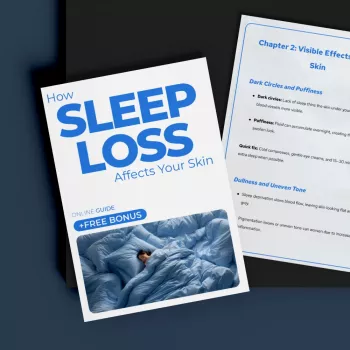
For a dedicated resource on these connected topics, explore our How Sleep Loss Affects Your Skin digital skincare guide. It covers sleep deprivation, dark circles, breakouts, and AI skin tracking, and is available for $12.99. Our team encourages you to use it as a guide for thinking through your observations, not as a substitute for individualized medical care.
If you are building broader routines beyond skincare, we also offer the Gen Z Smart Money Habits Bundle. It is a separate personal-finance resource, not a skin or sleep guide. Choose the resource that matches the decision you are actually trying to make, rather than adding more to your routine at once.
FAQ
Can one night of poor sleep cause dark circles?
A short night may make your under-eyes look more tired, but dark circles have several possible causes. One morning cannot establish the reason.
Does sleeping more get rid of breakouts?
Adequate sleep supports overall well-being, but acne has multiple contributors. Keep a consistent routine and seek professional advice for persistent breakouts.
Can AI skin tracking tell me what is causing a breakout?
No. Tracking can organize observations and help you notice patterns, but it cannot confirm a cause or replace a dermatologist’s assessment.











Leave a comment